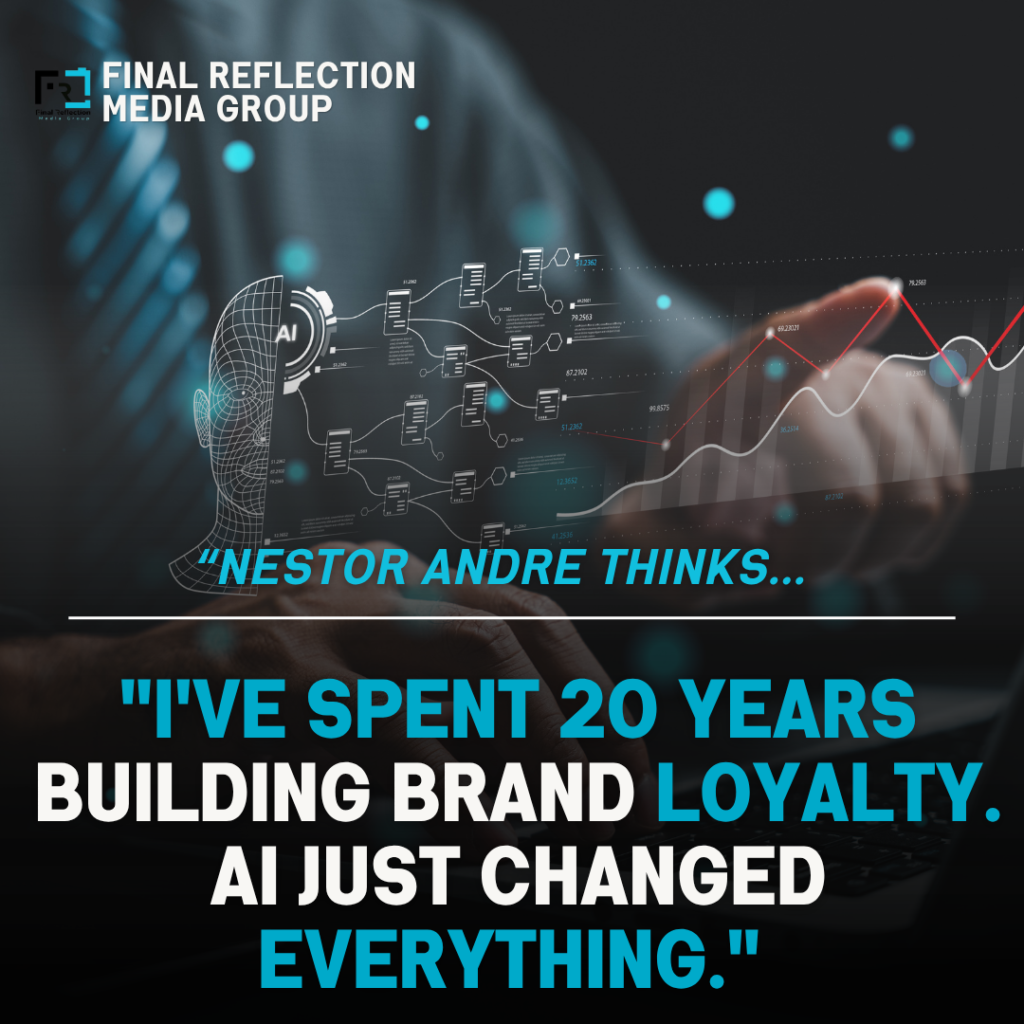
“I used to believe loyalty was earned through consistency. After two decades in branding, I’m realizing it’s earned through relevance — and AI is rewriting what relevance even means.”
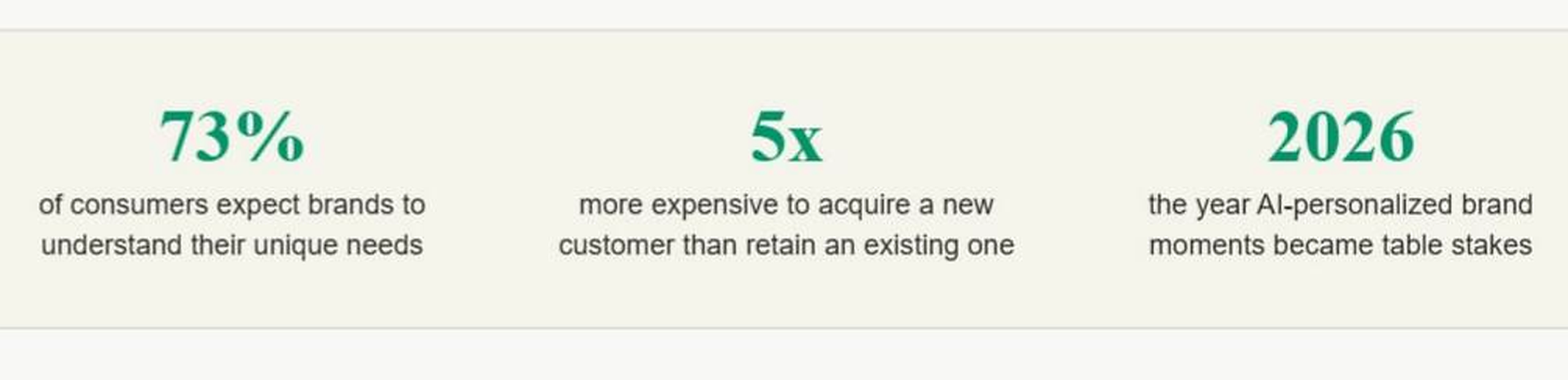
A few years ago, I sat in a boardroom with a consumer goods client who had just lost 18% of their repeat customers in a single quarter. Their product hadn’t changed. Their price hadn’t changed. Their marketing spend, if anything, had gone up. What had changed? Their customers had started expecting something the brand simply wasn’t built to deliver: the feeling of being truly understood.
That moment stuck with me. We’d spent months crafting their brand voice, their visual identity, their messaging pillars. Everything was “on brand.” But none of it was on person. And that’s the shift I’ve been obsessing over ever since.
The old loyalty playbook is obsolete
For most of my career, we built loyalty the old-fashioned way: punch cards, points programs, brand storytelling, and consistency. The idea was simple — show up the same way, every time, and customers would learn to trust you. And it worked. For a while.
But the game has fundamentally changed. Consumers today aren’t looking for consistency in presentation — they’re looking for consistency in understanding. They want brands that adapt, that remember, that feel less like a billboard and more like a conversation partner. And that is something AI is uniquely positioned to deliver.
What AI is actually changing
I want to be careful here, because a lot of the AI-in-branding conversation is noise. People talking about AI-generated logos and automated ad copy as if that’s the revolution. It isn’t. The real shift is happening at a deeper level — in how brands model relationships, predict emotional needs, and deliver meaning at scale.
“The brands that will win the next decade aren’t those with the best logo or the cleverest campaign. They’re the ones that make every single customer feel like the brand was built specifically for them.”
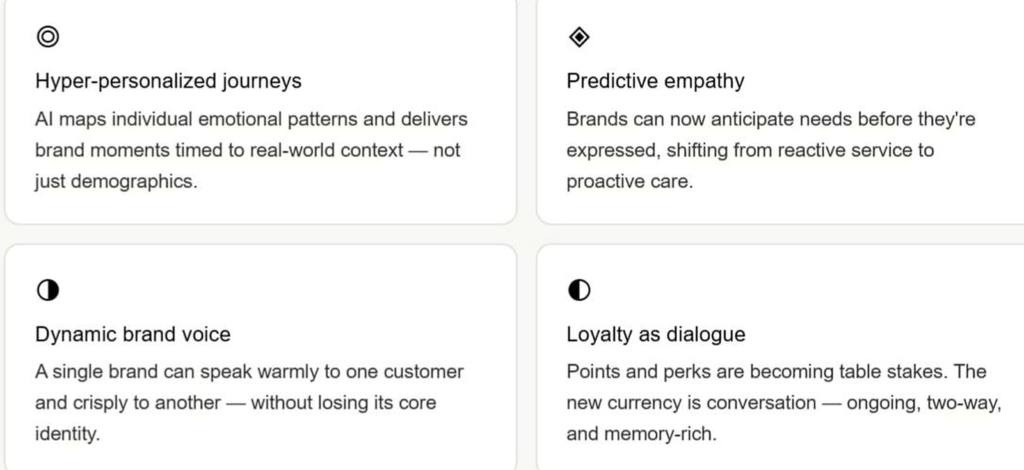
I’ve been working with a retail client over the past year who is piloting an AI-driven loyalty experience. Instead of offering the same 10%-off voucher to everyone, their system tracks behavioral signals — not just purchases, but browsing patterns, return behavior, how customers respond to different types of content — and uses that to dynamically shape what each person sees, hears, and receives from the brand. The results have been striking. Not just in conversion, but in sentiment. Customers feel seen.
The identity question no one is asking
Here’s the tension I keep running into with clients. If AI is personalizing everything — adapting the voice, the offer, the visual experience — then where does brand identity live? This is the question that keeps me up at night, and honestly, it’s the one I think the industry is underestimating.
My answer, after a lot of thinking and a few expensive mistakes: identity lives in values, not in executions. A brand’s AI can adapt its tone to be warmer for one customer and more direct for another, as long as it never compromises what the brand actually stands for. The execution is flexible. The soul isn’t.
I think of it like a great musician. Yo-Yo Ma plays Bach the same way whether he’s performing at Carnegie Hall or a school gymnasium — he adapts his presence, his interaction with the audience, his energy. But the music, the craft, the intention? That never changes. Brand identity in an AI world works exactly the same way.
“Personalization without principle is just manipulation dressed up as care. The brands that get this right will build the deepest loyalty we’ve ever seen. The ones that don’t will be found out faster than ever before.”
What I’m telling my clients today
The first thing I say is: your brand strategy needs an AI layer. Not an AI department. An AI layer — woven into how you think about customer relationships, not bolted on as a tech experiment. That means your brand guidelines need to address how your identity expresses itself across infinite personalized contexts. Most brand books I’ve seen were built for a world of broadcast. We’re in a world of dialogue now.
The second thing I say is harder: you need to earn the data. Customers will share behavioral signals with brands they trust. They won’t share with brands that feel extractive. So the prerequisite to AI-powered loyalty is old-fashioned trustworthiness — transparency about how data is used, generosity in the value returned, and respect that’s demonstrated in every interaction.
And the third — which is perhaps the most counterintuitive — is to design for the moments AI shouldn’t handle. The complaint that deserves a human voice. The long-term customer who hits a rough patch. The community touchpoint that requires genuine presence. AI expands your capacity for care. It doesn’t replace the heart of it.
Where this is all going
I genuinely believe we’re entering the most exciting era in branding in 50 years. The brands being built today — and the ones being rebuilt — have an opportunity to create relationships with customers that are deeper, more adaptive, and more human than anything that’s come before. That sounds paradoxical when AI is the mechanism. But tools don’t determine depth. Intent does.
The brands that approach this right will look less like companies and more like trusted companions. They’ll remember your preferences without being asked. They’ll show up in moments that matter without being intrusive. They’ll grow with you, rather than constantly trying to sell to you.
That’s not just the future of loyalty. That’s the future of what it means to be a brand.
– Nestor Andre